

A tray of golden homemade croissants with crisp flaky layers, served on a wooden board with a pat of butter and a small jar of jam.
These Homemade Croissants are buttery, flaky, and crisp on the outside with soft, honeycomb layers inside. Yes, they take time—but most of it is chilling, not hard work. The magic comes from laminating: folding butter into the dough to create tons of layers that puff up in the oven. If you want a cozy weekend baking project that feels better than a bakery, this is it.
Making Homemade Croissants is a little adventure, but you can absolutely do it. The key is keeping everything cold and following the steps in order. Once you bite into that first warm, flaky croissant, you’ll understand the hype.
My biggest tip? Don’t rush the chill times. Cold dough + cold butter = clean layers. Warm dough = butter leaks and the layers disappear. (Ask me how I know!)
Why You’ll Love This Homemade Croissants
- Better than bakery: Fresh croissants are unbelievably crisp and buttery.
- Weekend project win: Mostly hands-off chill time with big rewards.
- Classic French pastry: You’re making real laminated dough at home.
- Freezer-friendly: Bake some now, freeze some for later.
- Endless uses: Breakfast, brunch, sandwiches, or dessert.
Ingredients for Homemade Croissants
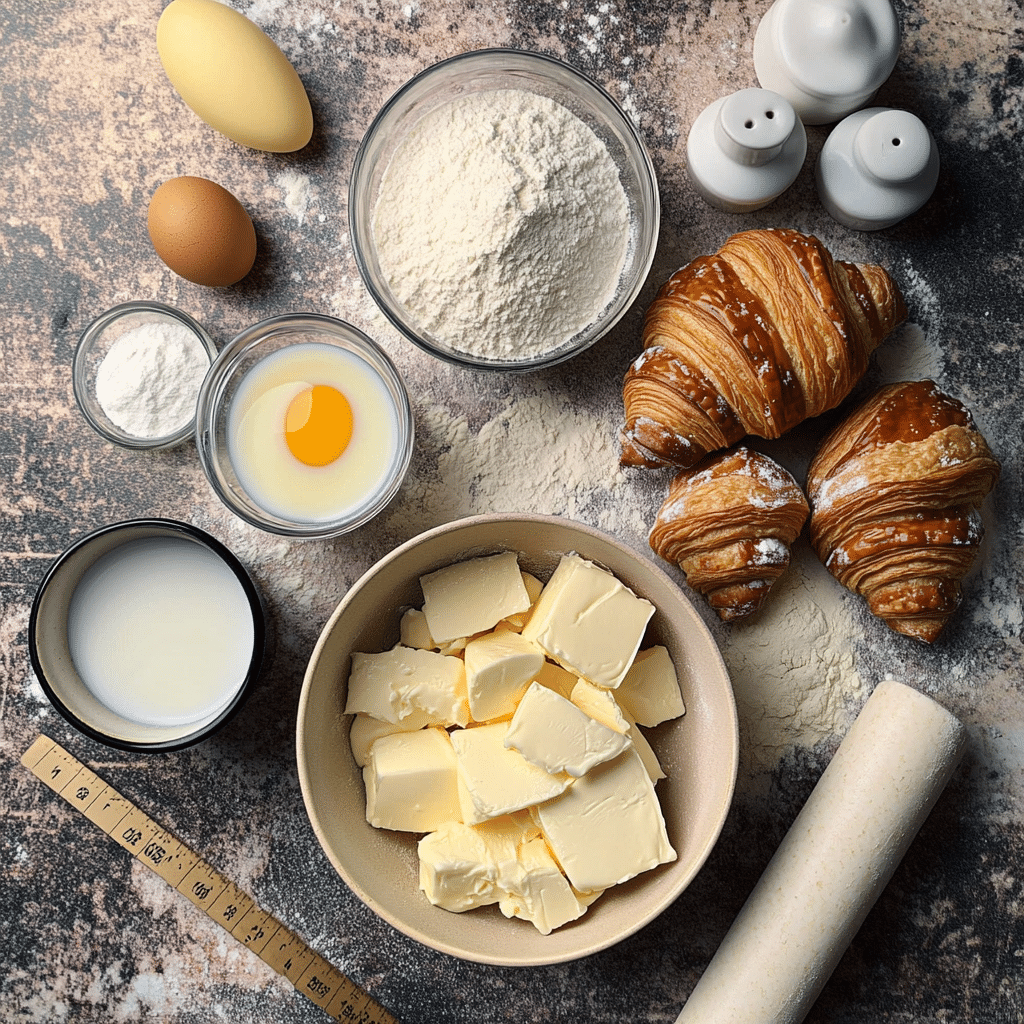
Dough
- All-purpose flour (4 cups): The base structure. Spoon and level for best results.
- Granulated sugar (1/4 cup): Adds slight sweetness and helps browning.
- Salt (2 teaspoons): Balances flavor (croissants should never taste bland).
- Instant or active dry yeast (1 tablespoon): Gives rise and lightness.
- Cold whole milk (1 1/2 cups): Keeps dough cool while mixing. Substitute: 2% milk works, but whole milk gives the best richness.
- Unsalted butter, softened (4 tablespoons): Adds tenderness in the dough.
Butter layer
- Unsalted butter, softened (1 1/2 cups): The star of lamination and flakiness. Upgrade option: European-style butter for extra richness.
- All-purpose flour (2 tablespoons): Helps stabilize the butter layer so it spreads nicely.
Egg wash
- Large egg (1): Helps get that glossy, golden top.
- Whole milk (2 tablespoons): Loosens the egg for easy brushing.
Homemade Croissants Recipe Step-by-Step
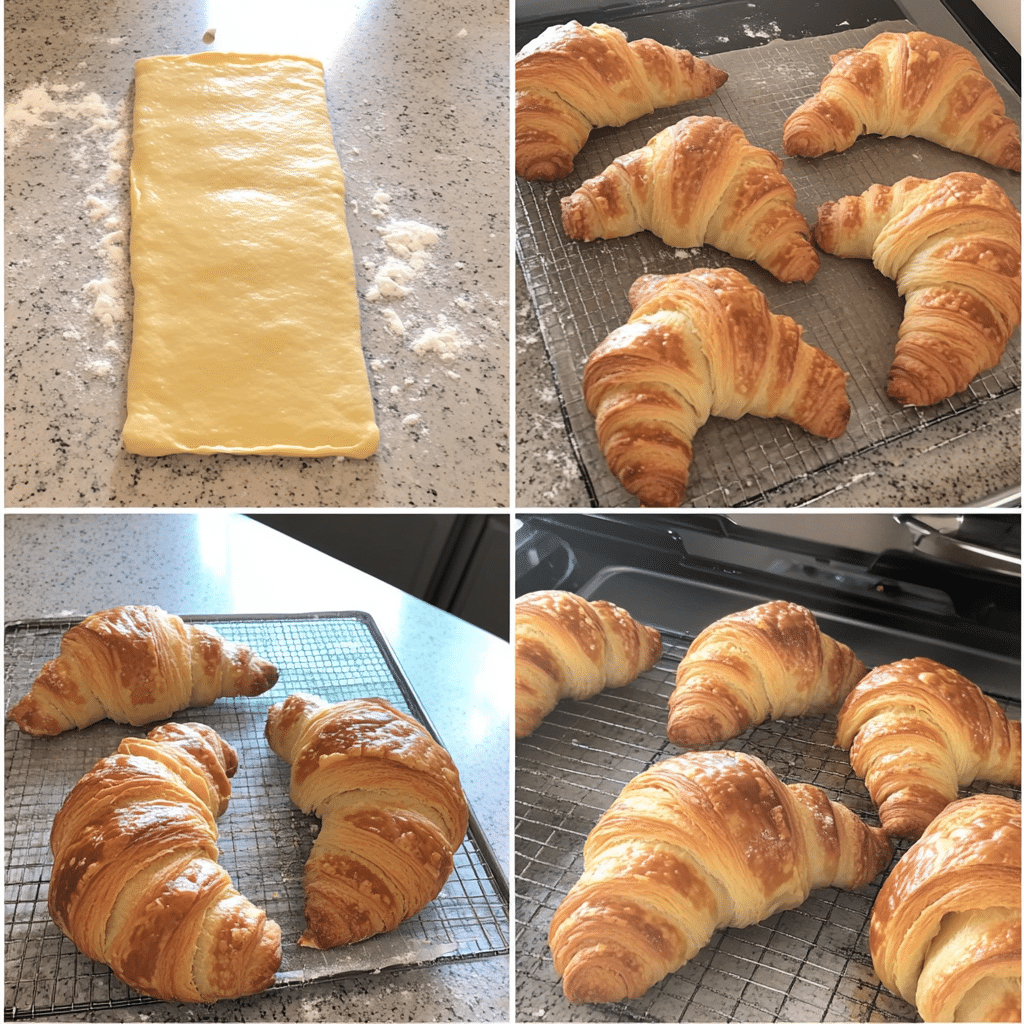
- 1. Mix the dough: In a large bowl (or stand mixer), combine flour, sugar, salt, and yeast. Add the softened butter and cold milk, then mix until a shaggy dough forms. Knead about 5 minutes until smooth and slightly tacky.
- 2. Chill the dough: Shape into a ball, cover, and refrigerate 30 minutes. Then roll into a 14×10-inch rectangle. Cover and chill 4 hours (or overnight). Cold dough makes better layers.
- 3. Make the butter layer: Stir the softened butter with the 2 tablespoons flour until smooth. Spread into a 7×10-inch rectangle on parchment or a silicone mat. Chill about 30 minutes—firm but still bendable.
- 4. Enclose the butter: Place the butter rectangle on half the chilled dough and fold the dough over to seal the butter inside. Press edges to seal so butter stays put.
- 5. Laminate (the layer-making part): Roll the dough into a long rectangle and fold into thirds like a letter. Turn it and repeat to fold into thirds again. If the dough feels warm, chill 30 minutes. Do a third roll-and-fold. (Three folds creates lots of layers!)
- 6. Rest the dough: Wrap and chill 4 hours or overnight. This relaxes the dough so it rolls without fighting you.
- 7. Shape the croissants: Roll into an 8×20-inch rectangle. Cut into long triangles. Gently stretch each triangle, cut a small slit at the wide end, then roll up tightly into a crescent. Place on lined baking sheets.
- 8. Proof & bake: Loosely cover and let rise at room temp 1 hour, then refrigerate 1 hour (cold croissants go into the oven cleaner). Preheat to 400°F. Brush with egg wash and bake about 20 minutes, rotating pans halfway, until deeply golden. If they brown too fast, reduce oven to 375°F for the last few minutes.
Tips for Perfect Homemade Croissants
- Keep everything cold: If dough warms up, chill it for 20 minutes before continuing.
- Match butter softness to dough: Butter that’s too hard can crack; too soft can ooze.
- Measure your rectangles: A ruler makes this so much easier and more consistent.
- Don’t press too hard when rolling: You want layers, not squished butter.
- Bake until deeply golden: Pale croissants won’t be crisp and flavorful.
Variations & Substitutions
- Chocolate croissants: Add a few chocolate batons before rolling.
- Ham and cheese: Add thin slices and shredded cheese, but don’t overfill.
- Almond style: Slice baked croissants and fill with almond cream, then bake briefly to set.
- Dairy swap: Use high-fat plant-based butter and plant milk (results vary, but it can work).
- Mini croissants: Cut smaller triangles for party trays (reduce bake time a bit).
Make-Ahead & Freezing
- Make ahead: You can chill the laminated dough overnight before shaping.
- Freeze shaped croissants: After the 1-hour room-temp rise, freeze on a tray, then store in a freezer bag for up to 1 month. Thaw in the fridge, then bake.
- Freeze baked croissants: Cool completely, wrap well, and freeze for up to 3 months. Rewarm in a 325°F oven until crisp.
Serving Suggestions & Pairings
- Warm with butter and jam for a classic breakfast.
- Make egg sandwiches for brunch (better than takeout).
- Serve with fruit and coffee for a cozy weekend spread.
- Use leftover croissants for bread pudding (so good).
Reader Review: “First time making croissants and they actually worked! The layers were flaky and crisp, and the instructions kept me calm the whole time.”
If you bake these Homemade Croissants, leave a rating and comment. What would you fill yours with—chocolate, ham and cheese, or classic plain?